
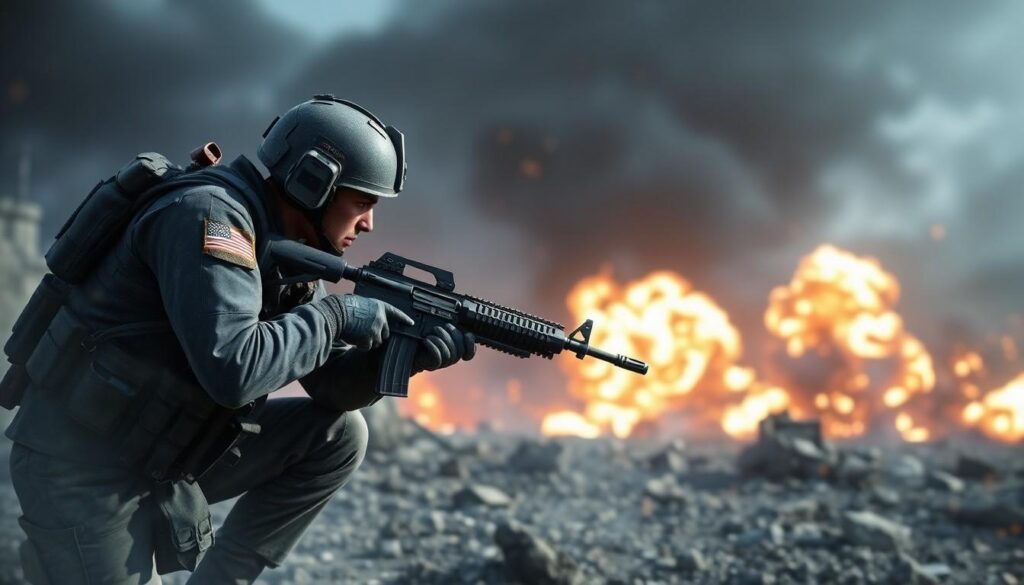
In the world of gaming, few franchises have captured hearts and minds quite like Battlefield. With its explosive gameplay and epic multiplayer battles, players have been diving into this virtual warzone for years. But with so many titles in the series, one might wonder: what’s the proper order to experience this adrenaline-fueled saga?
Overview Of Battlefield Series
Battlefield is a renowned series in the world of video games. It emphasizes large-scale multiplayer battles, allowing players to engage in intense warfare across diverse environments. The franchise began in 2002 with “Battlefield 1942,” which introduced players to World War II combat and laid the foundation for future titles.
Subsequent releases expanded the timeline and gameplay mechanics. “Battlefield Vietnam” followed in 2004, immersing players in the Vietnam War experience. With “Battlefield 2” in 2005, modern warfare was introduced, setting new standards for tactical gameplay. The game featured advanced vehicle and soldier mechanics, enriching the multiplayer experience.
A significant shift occurred with “Battlefield 3” in 2011, moving the series into contemporary warfare. This title showcased stunning graphics and a refined Frostbite engine. A host of new multiplayer features were introduced, elevating gameplay to new heights.
Beyond modern settings, the franchise returned to historical contexts with “Battlefield 1” in 2016. Set during World War I, the game captured the chaos of trench warfare and offered unique gameplay elements. Players appreciated the historical depth and the evolution of each battlefield.
“Battlefield V,” released in 2018, continued this trend, focusing on World War II yet again. The title sought to innovate with new modes, including a cooperative experience called “Combined Arms.” Notably, the game received mixed reviews but retained a dedicated player base.
Recent entries, including “Battlefield 2042,” propelled the series into the near future. Emphasizing large-scale battles with up to 128 players, this installment introduced new gameplay dynamics. The series continues to evolve, adapting to current gaming trends while keeping its core identity intact.
Battlefield Release Order

The Battlefield franchise features multiple titles, each contributing to its rich history. Understanding the release order provides insights into the game’s evolution and diverse combat experiences.
Main Titles
- Battlefield 1942 (2002) introduced players to World War II combat.
- Battlefield Vietnam (2004) expanded the timeline and settings to include the Vietnam War.
- Battlefield 2 (2005) showcased modern warfare and introduced squad-based gameplay.
- Battlefield 3 (2011) marked a significant shift with its contemporary military focus and advanced graphics.
- Battlefield 4 (2013) built on this success, further enhancing multiplayer dynamics.
- Battlefield 1 (2016) reverted to historical settings, exploring World War I themes.
- Battlefield V (2018) returned to World War II, focusing on untold stories from that era.
- Battlefield 2042 (2021) pushed the franchise into the near future, emphasizing large-scale battles.
Spin-Offs and Expansions
- Battlefield 1943 (2009) offered a standalone experience set during World War II with simplified gameplay.
- Battlefield: Bad Company (2008) introduced a cinematic single-player experience alongside multiplayer modes.
- Battlefield: Hardline (2015) diverged from the military theme and focused on police versus criminal conflicts.
- Battlefield 1: Apocalypse (2018) expanded Battlefield 1 with new maps and gameplay features based on World War I battles.
- Battlefield V: Firestorm (2019) introduced a battle royale mode to diversify gameplay options.
- Battlefield 2042: Season One (2022) added new content, vehicles, and maps to continue the franchise’s legacy.
Impact of Release Order on the Franchise
The release order of Battlefield titles significantly influences player experience and franchise growth. Each installment shapes player expectations and contributes to the overall identity of the series.
Player Reception
Player reception varies based on release order and game context. “Battlefield 3” garnered acclaim for its graphics and multiplayer experience, establishing a high bar for subsequent entries. “Battlefield 1” received praise for its unique World War I setting and immersive storytelling, appealing to new and returning players. Conversely, “Battlefield V” faced criticism for its historical inaccuracies and gameplay changes. Recent titles like “Battlefield 2042” have sparked divided opinions due to gameplay shifts, showcasing how player sentiment evolves with each release.
Evolution of Gameplay Mechanics
Gameplay mechanics evolve as the franchise progresses through its release schedule. Initial titles focused on large-scale battles with basic mechanics, providing an engaging experience. “Battlefield 3” introduced advanced visuals and enhanced multiplayer dynamics, setting a new standard. Following this, “Battlefield 1” emphasized tactical gameplay and immersive environments, enriching player strategy. Newer entries like “Battlefield 2042” emphasize customization and team-based tactics, reflecting ongoing changes in gamer preferences and technological advancements. Each release adapts gameplay to meet player demands while maintaining core franchise elements.
Notable Features in Each Game
“Battlefield 1942” set the standard for team-based gameplay and vehicle mechanics, offering players an immersive World War II experience. “Battlefield Vietnam” introduced a more dynamic combat environment with diverse landscapes and unique weapons, further enhancing the multiplayer experience.
“Battlefield 2” focused on modern warfare, featuring enhanced squad-based tactics and introducing the Commander mode, allowing players to give orders from a strategic vantage point. “Battlefield 3” brought advancements in graphics and gameplay, showcasing destructible environments and introducing the Frostbite engine for a more realistic experience.
Immersive storytelling defined “Battlefield 1,” which highlighted World War I through various soldier perspectives, offering players a unique narrative experience. In contrast, “Battlefield V” revisited World War II while emphasizing a more personal and customizable gameplay with new mechanics.
“Battlefield 2042” shifted the focus to the near future, promising unprecedented large-scale battles and introducing new gameplay dynamics like specialist characters. The game emphasized innovation, integrating new technologies that changed player interactions and tactics on the battlefield.
Additional titles like “Battlefield 4” enhanced the multiplayer dynamics with improved visuals and new game modes, ensuring frantic battles and varied gameplay. Spin-offs such as “Battlefield: Bad Company” incorporated humor and a strong narrative, which attracted a different audience and provided a fresh take on the franchise.
Expansions and themed content like “Battlefield 1: Apocalypse” and “Battlefield V: Firestorm” diversified gameplay options, introducing new maps, modes, and challenges to keep players engaged. Each installment contributed to the series’ evolution, highlighting technological advancements and shifting player preferences throughout the franchise’s journey.
Conclusion
The Battlefield franchise continues to captivate players with its evolving gameplay and rich narratives. Each title contributes uniquely to the overall experience, reflecting the changing landscape of gaming and player expectations. Understanding the release order not only enhances appreciation for the series but also helps gamers navigate its diverse offerings. As the franchise moves forward, it remains poised to deliver thrilling battles and innovative mechanics that keep players engaged. With a legacy that spans over two decades, Battlefield’s journey is a testament to its enduring appeal in the gaming world.

